
Service Online
400-0177-727

The children's room is the "first space" for children's growth, but the choice of wall coatings is often overlooked - you may have carefully selected environmentally friendly furniture and non slip flooring, but not realize that coatings are the "hidden source" of indoor air pollution. Traditional oil-based paints contain a large amount of formaldehyde and benzene derivatives. Long term inhalation by children may cause coughing, allergies, and even affect development. And water-based paint, with its characteristics of "water as a solvent, low harm and environmental protection", is becoming the "safe choice" for parents. Today, starting from the health needs of children, we will break down why "choosing water-based paint=double protection for family members" and how to choose the "safe coating" that is truly suitable for children.
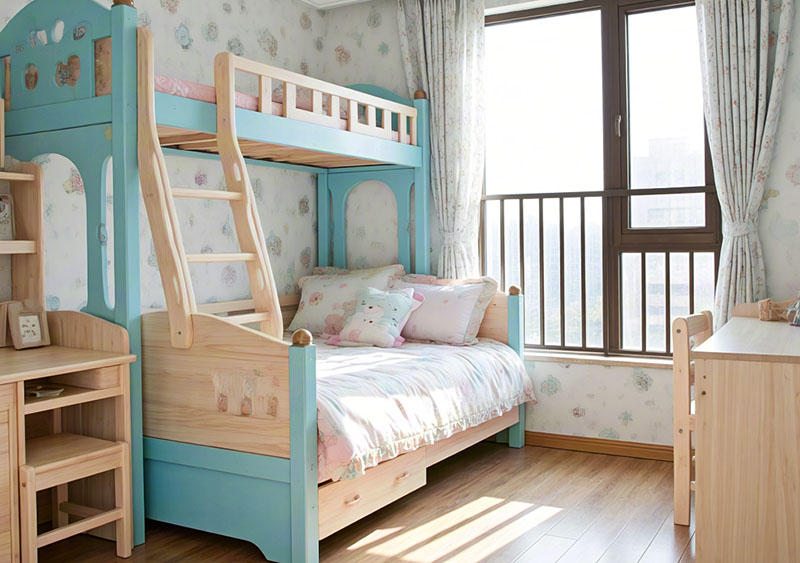
1、 Why do children's room coatings have to prioritize safety?
Children's bodies are more "fragile" than adults and have a "zero tolerance" for harmful substances in paint. These three physiological characteristics determine that children's room coatings must be selected rigorously:
1. Respiratory rate is 50% higher than that of adults, and the inhalation of harmful substances doubles
Children breathe about 20-30 times per minute (adults breathe 12-20 times), and their height is short and close to the ground (harmful substances in paint often settle below 1 meter), which means that in the same space, children inhale 1.5-2 times more harmful substances than adults. The VOC (volatile organic compounds) content in oil-based paints generally exceeds the standard, with a release period of 3-15 years. Long term exposure may lead to weakened immunity and lack of concentration.
2. Skin and mucous membranes are more sensitive, which can easily cause "hidden damage"
The child's skin has a thin stratum corneum, and contact with residual heavy metals (lead, cadmium) or formaldehyde on the wall may cause rash and itching; When licking furniture (such as gnawing on the headboard), if the paint contains soluble heavy metals, it will directly enter the body through the mouth, affecting the development of the nervous system (the national standard requires that heavy metals in children's room paint should not be detected, that is, they cannot be detected within the detection accuracy).
3. 'Behavioral habits' amplify risks: graffiti, touching, climbing
Children like to draw on the wall, touch the wall with their hands, and step on the ground barefoot. If the paint is "not durable and easy to peel off", stains and powder will enter the body through hand mouth contact. Traditional latex paint has a scrub resistance of less than 5000 times, and after repeated wiping, it loses powder and becomes a "secondary pollution source".
2、 Water based paint: 3 core advantages, providing a "health protection shield" for the whole family
Compared to oil-based paint and ordinary latex paint, water-based paint is fully suitable for the needs of families (especially children's rooms) from "source safety" to "usage details", achieving "friendliness to family and children".
1. For the whole family: low VOC+no odor, "stay after brushing" without any fuss
Environmentally friendly: Water based paint uses water as a diluent and does not require the addition of toxic solvents such as benzene and toluene. The VOC content can be as low as 10g/L or less, and formaldehyde and heavy metals are "not detected" (marked as "ND" in the test report).
Odor dissipates quickly: Traditional oil-based paints require ventilation for 3 months to dissipate the odor, while high-quality water-based paints use "bamboo charcoal odor purification technology". After 24 hours of construction, the odor basically dissipates, and after 7 days of ventilation, the formaldehyde concentration can be reduced to safety standards. Elderly and pregnant women can also use their rooms with confidence.
Reduce secondary air pollution: Oil based paints release toxic gases (such as carbon monoxide) when burned, while water-based paints have good flame retardancy and do not produce ozone pollution (VOCs are ozone precursors), protecting the respiratory health of the whole family.
2. For children: 3 exclusive guardians that meet their growth needs
① Scratch resistant 'ceiling': children's graffiti can be wiped clean with just one wipe
Milk stains, crayon graffiti, and handprints can be easily wiped clean with a damp cloth and soapy water, without shedding powder or exposing the base, to prevent children from coming into contact with the peeling paint powder.
② Antibacterial and anti mold "black technology": reducing the risk of allergies
Excessive sweating and accumulation of toys in children can easily cause the room to become damp, and ordinary paint can easily breed mold (such as on the back walls and corners of wardrobes). Water based paint can be added with "silver ion antibacterial agent", with an antibacterial rate of ≥ 99% (significant inhibition effect on Escherichia coli and Staphylococcus aureus), and an anti mold grade of 0 (no mold growth at all), reducing children's sneezing and skin itching caused by mold allergies.
③ Soft and non glaring colors: protecting children's vision
Children's rooms with too bright colors (such as bright red or yellow) can stimulate nerves and affect concentration; If it is too dark, it is easy to suppress. The water-based paint color paste adopts a "low saturation color masterbatch", which can be formulated into a soft "eye protection color system" (such as light blue, light green, milky white), with moderate light reflectivity (40% -60%), avoiding "glare" when exposed to strong light, and protecting children's developing vision.
3、 Parents Choose Paint "5-Step Practical Guide": Avoid "Pseudo Environmental Protection" and Choose True Safety
The concepts of "children's paint" and "environmentally friendly paint" are flying everywhere in the market. How can parents develop their "sharp eyes"? Remember these 5 steps to refuse to pay the 'IQ tax':
Step 1: Check the "Environmental Protection Testing Report", three indicators must be examined
VOC measured value: directly refer to the "VOC content" in the test report. For children's rooms, it is recommended to choose ≤ 20g/L (more stringent than the national standard for superior products), and the lower the value, the better;
Free formaldehyde: It must be labeled as "not detected" (ND). If it shows "≤ 0.1mg/kg" (the upper limit of the national standard), the "not detected" option should be prioritized;
Heavy metals: lead, cadmium, mercury, and arsenic must not be detected, especially lead (lead poisoning in children can affect intellectual development), which cannot be compromised.
Avoiding pitfalls: Don't believe in "verbal promises", require merchants to provide CMA certified testing reports (only those with the "CMA" logo are authoritative), and the report date must be within 1 year (to avoid expired data).
Step 2: Select the "Functional" option, which includes three essential additional features for children's rooms
Priority for "antibacterial and mildew proof" products: a must-have for humid southern regions and coastal cities (packaging labeled with "antibacterial rate of 99%" and "mildew proof level 0");
Choose "washable ≥ 20000 times": Families with children should choose at least 20000 times to avoid frequent repainting;
Optional "breathable and humidity regulating" option: such as water-based paint with added diatomaceous earth components, it can absorb room moisture (children sweating, after showering) and prevent wall mold.
3. Step 3: "Smell the smell+see the texture" on site, refuse to "cover up with essence"
Smell: when the paint bucket is opened, the high-quality water-based paint has only a slight "lotion smell" (similar to yogurt or soapy water), without pungent and hot eyes; If there is fragrance (such as fruit fragrance and flower fragrance), essence may be added to cover up the harmful smell, so choose carefully;
Texture: When stirred, it is delicate and smooth, without layering or sedimentation. After drying on a glass plate, it forms a uniform film without cracks or pinholes.
Step 4: Three Details of Construction to Avoid Discounting Environmental Protection
It is necessary to apply a "children's room specific primer": the primer can seal the wall base layer (to prevent alkali return and uneven paint absorption), and choose a "alkali resistant+low VOC" dual function primer to enhance the adhesion of the topcoat;
Don't be lazy with "one bottom, two sides": 1 coat of primer+2 coats of topcoat, brush the next coat after each coat is dry (with an interval of 4-6 hours), to avoid thick brushing causing sagging and cracking;
Ventilation for 7 days after construction: Although water-based paint has a low odor, it is recommended to ventilate for more than 7 days before allowing children to move in. During this period, keep doors and windows open and use a fan to accelerate air circulation.
Step 5: Accept the "3 checks" and confirm safety before moving in
Odor test: Close doors and windows for 12 hours, enter the room without obvious odor, and smell no irritating odor near the wall;
Wipe resistance test: Dip a damp cloth in soapy water and wipe the wall repeatedly for 20 times, without shedding powder, exposing the substrate, or discoloration;
Formaldehyde testing: If conditions permit, professional institutions can be hired for testing. Formaldehyde ≤ 0.05mg/m ³ (stricter than the national standard and suitable for children's rooms).
The essence of choosing paint is to choose safety, health, and growth environment. Water based paint replaces "chemical stimulation" with "gentle water", allowing children to freely doodle on walls and run freely in rooms without worrying about "invisible injuries". To be good to family and children, there is no need to pursue "high priced gimmicks", just recognize "low harm, durable, and truly environmentally friendly" - this is the meaning of choosing water-based paint.


